
Ukrainian Refugees Report
English translation and summary of the report N1
The report discusses the Ukrainian refugee situation in the Netherlands. Currently, there are 118,730 Ukrainian refugees in the Netherlands, with numbers still growing – showing a 13,000 increase from the previous year. About 40,000 refugees have left the Netherlands since the war began, with half returning to Ukraine and others moving to different countries.
Regarding Accommodation:
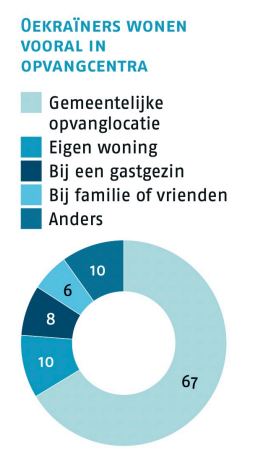
- Two-thirds live in municipal emergency shelters with shared facilities
- A small percentage (8%) stay with host families, down from over one third initially
- Refugees rate living with host families higher (8.7/10) than municipal shelters (7.7/10)
- About 50% of Ukrainians express desire to move into their own housing
The key trend shows that while the Netherlands continues to receive Ukrainian refugees, there’s been
a significant shift from host family accommodation to municipal shelters, with many refugees hoping
to find independent housing.
Victims of Human Trafficking Report
English translation and summary of the report N2.
The article discusses a major criminal investigation into the trafficking of Eritrean refugees to the Netherlands, based on testimony from 124 witnesses. Using a composite story of two fictional refugees (Saba and Selam), it illustrates how Eritreans fleeing military service often become victims of organized crime during their journey through Sudan and Libya.
Key Points
- Refugees were held in warehouses under terrible conditions
- They were subjected to violence, assault, and forced to request ransom from families
- Many were resold multiple times between traffickers
- About 25% of victims were women, and 20% were minors
- Deaths were common due to poor conditions
The case is unique because it’s the first time foreign smugglers are being prosecuted on this scale for crimes committed in another country. However, National Rapporteur Conny Rijken argues that these cases should be classified as human trafficking rather than smuggling because:
✔ It would better reflect the victims’ experiences
✔ Victims would gain access to specialized psychological help and shelter
✔ There’s a crucial legal distinction: smuggling is a crime against the state, while trafficking is a crime against the person
The article emphasizes that the trauma from these experiences often surfaces only after refugees have settled safely in the Netherlands, highlighting the need for better support systems.
Policy Changes in The Netherlands Report
English translation and summary of the report N3
The article discusses the “race to the bottom” in European asylum policies, where countries are trying to become as unattractive as possible to asylum seekers. It compares the Netherlands’ new asylum policies under the Schoof cabinet with six other European countries (Germany, France, UK, Sweden, Poland, and Italy).
Key Policy Changes in The Netherlands
- Border Controls
- Introducing new controls at Belgian and German borders from December 9
- Asylum Status
- Planning to implement a two-status system, giving fewer rights to those with “subsidiary protection”
- Reducing residence permit validity from 5 to 3 years
- Eliminating permanent residence permits for asylum seekers
- Family Reunification
- Restricting unmarried partner reunification
- Ending family reunification for adult children (currently allowed up to age 24)
- Housing & Settlement
- Removing priority housing for refugees in social housing
- Moving towards temporary accommodation in “transit locations”
- Reducing UN refugee resettlement quota from 500 to 200 per year
- Syrian Returns
- Proposing to designate parts of Syria as safe for returns, though no European country currently forces returns to Syria
The article notes that these changes bring the Netherlands closer to the EU’s minimum requirements for asylum policies. Expert Mark Klaassen from Leiden University describes this as a targeted effort to tighten asylum policies wherever legally possible, rather than a comprehensive policy reform.
The comparison shows that while some of these measures align with otherEuropean countries’ practices, others (like the Syrian return proposal) would make Dutch policy notably stricter than its neighbors. However, the article emphasizes that this comparison shouldn’t be used to judge whether Dutch asylum policy is generally generous or strict, as these are specifically selected areas where restrictions are legally possible.
Wealthy Nations Refugee Policies Report
English translation and summary of the report N4
The article presents criticism from a UNHCR diplomat about wealthy nations’ refugee policies, particularly focusing on the Netherlands.
Key Points Include:
- Wealthy nations aren’t doing their fair share compared to poorer countries
- Current restrictive policies (like border control and asylum boats) are ineffective
- Europe has demonstrated its capability to help through its response to Ukrainian refugees (8.2 million welcomed)
- There’s a concerning disparity between the treatment of Ukrainian refugees versus those from African countries
- The UNHCR worries about racial bias in refugee policies
- The diplomat advocates for:
Help Organization Report
English translation and summary of the report N5
Aid organization People for People is expanding its focus from solely Ukrainian war refugees to helping all refugees in the Netherlands.
Key Points:
01
Change in Focus
- Moving from Ukraine-specific aid to helping all refugees in Netherlands
- Response to poor conditions in Dutch reception centers
- Currently, 44,000 asylum seekers at 140 locations lack basic necessities
02
Main Activities
- Providing emergency supplies (already distributed 1,000 emergency packages to Ter Apel)
- Offering information services
- Ensuring inclusion of refugees in solution-finding
- Arranging food, clothing, and sleeping accommodations
03
Leadership Approach
- Led by entrepreneurs including Ali Niknam
- Uses business-style rapid response approach
- Works with partners including Red Cross, COA, and Refugee Work
04
Goals
- Improve living conditions in reception centers
- Find structural solutions to refugee reception problems
- Create dignified reception conditions for all refugees
- Coordinate with various organizations and citizens
The organization emphasizes a hands-on, entrepreneurial approach to solving refugee reception issues, focusing on both immediate aid and long
term solutions. They’re actively seeking more participants and organizations to join their collective effort, with interested parties able to join via WhatsApp.
The initiative represents a shift from emergency response to systemic problem-solving in the Dutch refugee reception system, addressing issues like lack of information, reception capacity, and fragmented approaches based on origin.
APA References
N1. (4 januari 2025 zaterdag). Hoe de opvang van Oekraïense vluchtelingen in Nederland geregeld is. Nederlands Dagblad.
N2. Johan van Heerde. (22 januari 2025 woensdag). Vluchtelingen onderweg naar Nederland slachtoffer van mensenhandel. trouw.nl
N3. MAARTJE BAKKER. (9 december 2024 maandag). Op weg naar de ondergrens: waar staat het Nederlandse asielbeleid in Europa?. de Volkskrant
N4. (12 mei 2023 vrijdag). VN: Nederland moet meer vluchtelingen opvangen. Friesch Dagblad.
N5. Redactie De Ondernemer. (10 oktober 2023 dinsdag). Ondernemerscollectief People for People zet zich vanaf nu in voor alle vluchtelingen in Nederland. DeOndernemer.nl.